Where Your Systems Actually Sleep: A 2026 Hosting Decision Map for UK Buyers
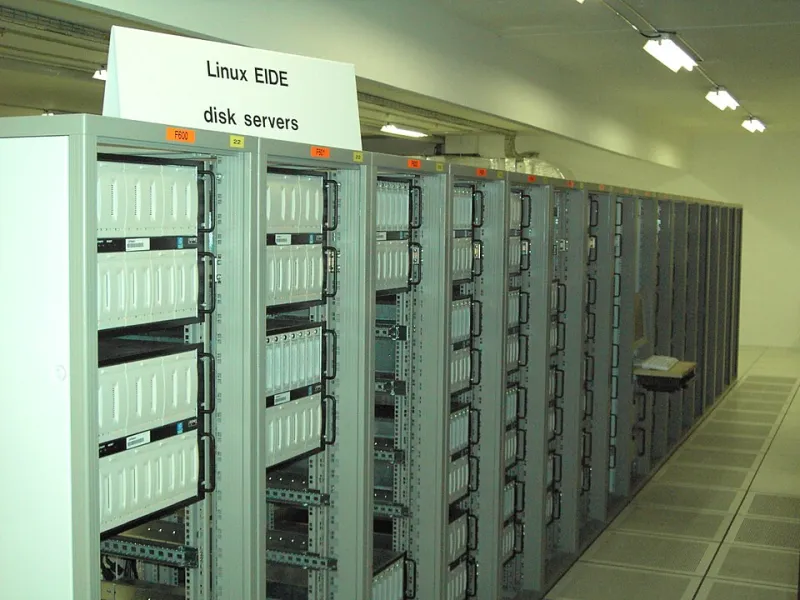
Photo: Faber, CC BY-SA 2.0, via Wikimedia Commons
For much of the past decade, the hosting question was settled late and quietly. Security teams ticked a box, procurement noted the region, and the contract was signed. That arrangement no longer holds. Where a system stores and processes data now shapes the price you pay, the clauses you can negotiate and the speed at which you can leave. UK buyers who treat jurisdiction as an afterthought are, in effect, letting a supplier choose their regulatory exposure for them.
What follows is a decision map rather than a legal briefing. It is designed to be usable in a commercial conversation this week, not to replace advice from counsel when the stakes justify it.
Begin with the data, not the datacentre
Vendors tend to answer the residency question with a single word: "London" or "Dublin" or "Frankfurt". That answer is only meaningful once you have classified what is going into the system. A workable split is three tiers: ordinary business information; personal data that carries meaningful harm if mishandled; and data restricted by regulation, contract or client instruction.
Few organisations have one answer across the estate. Payroll, the CRM, the analytics warehouse, backup copies, the support desk and the email security gateway may each deserve a different destination. Attempting a single group-wide policy usually produces either unnecessary cost at one end or unacceptable exposure at the other.
The four destinations, and what each one genuinely buys
UK-hosted. The simplest UK GDPR narrative, and usually the shortest path through a Data Protection Impact Assessment. Subject access requests and law enforcement enquiries travel through familiar UK mechanisms. The caveat is ownership: a UK datacentre operated by a US-incorporated parent is still within reach of that parent's legal obligations. Jurisdiction follows the entity, not the postcode.
EU-hosted. Attractive for latency and for suppliers with European engineering centres. The important caveat for UK buyers is that transfers rest on the EU's adequacy decision for the UK, which is time-limited and subject to periodic review. Treat adequacy as a live dependency with a review date attached, not as a permanent feature of the landscape. Note also that EU hosting does not prevent support staff in another region from accessing the data.
US-hosted. Often the cheapest and most feature-rich option, and frequently the default because the product was built there. Two exposures matter. First, the UK–US data bridge depends on the recipient's certification under the relevant framework, and certification status can change. Second, providers incorporated in the United States may be compelled to disclose data held elsewhere, which is a legal reality no amount of European datacentre capacity removes.
On-premises. Maximum control, minimum agility. The right answer for a narrow set of high-sensitivity systems, particularly where connectivity is unreliable or where the data cannot lawfully leave a controlled environment. It brings capital cost, patching discipline and resilience obligations that are easy to underestimate.
Follow the chain, not the headline
A data flow diagram is worth more than a sub-processor list. Ask where support engineers sit, where logs are aggregated, where backups and disaster recovery copies are written, and whether any embedded analytics or AI feature calls a model endpoint in a third country. Increasingly, the answer to the last question differs from the answer to the first.
Then read the change clauses. You want advance notice of new sub-processors, a genuine objection window measured in weeks rather than hours, and a right to terminate without penalty if an objection is upheld and the supplier will not budge.
A short word on latency
Latency arguments are often overstated and occasionally decisive. For most interactive business applications, users notice delay somewhere north of roughly 150 milliseconds. A London region will typically serve UK staff in single-digit milliseconds; Dublin or Amsterdam add a small but usually tolerable amount; US East Coast round trips commonly land in the 70 to 90 millisecond range. That is fine for a monthly report and unpleasant for a contact-centre screen refresh or a CAD session. Test the specific workflow rather than the generic claim.
The clause that settles most arguments: exit
Residency debates frequently end at the exit clause. Ask what you receive on termination, in which open format, within what period, at what fee, and whether egress charges apply. Ask for transition assistance expressed in days, a deletion certificate with a date, and a mechanism that triggers if the regulatory position changes materially. A supplier confident in its position will not resist a regulatory-divergence clause; one that does is telling you something useful.
Five questions for next week's negotiation
- For this specific system, which data categories will be stored and processed in which countries, including backups and disaster recovery?
- Which legal entity signs, and which affiliated entities or contractors can access the data?
- Can we see the current sub-processor list, the notice period for changes and the objection window?
- If adequacy or certification status changes, what happens to the contract, the price and the migration timetable?
- On exit, what do we get, in what format, by when, and at what cost?
Record the decision in one page
For each material system, capture the data classification, the hosting destination, the contracting entity, the review date and the named owner. Diarise the review annually and whenever a sub-processor or certification change is notified. The map is only useful if someone is holding it.