The Estate Beneath the Estate: Auditing Analogue Lines Before the Copper Switch-Off
By now, most UK IT and operations leads can produce a broadband circuit list and a mobile tariff schedule within minutes. Ask for an inventory of analogue lines, and the room tends to fall quiet. These are the lines that keep lift intercoms, intruder alarm signalling, fire panels, fax servers, card payment terminals and out-of-hours handsets alive. They seldom appear on a service catalogue because nobody bought them as a service; they arrived with the building, the lift maintenance contract or a predecessor's improvisation.
The deadline is no longer theoretical. Openreach has operated a stop-sell on new PSTN lines since September 2023, and the copper network is scheduled to be switched off on 31 January 2027. The transitional product that has allowed some analogue lines to be ordered in the meantime, SOTAP, is itself being withdrawn at the end of December 2026. As of November 2026, the remaining window is measured in weeks, not years.
Why your asset register will not help
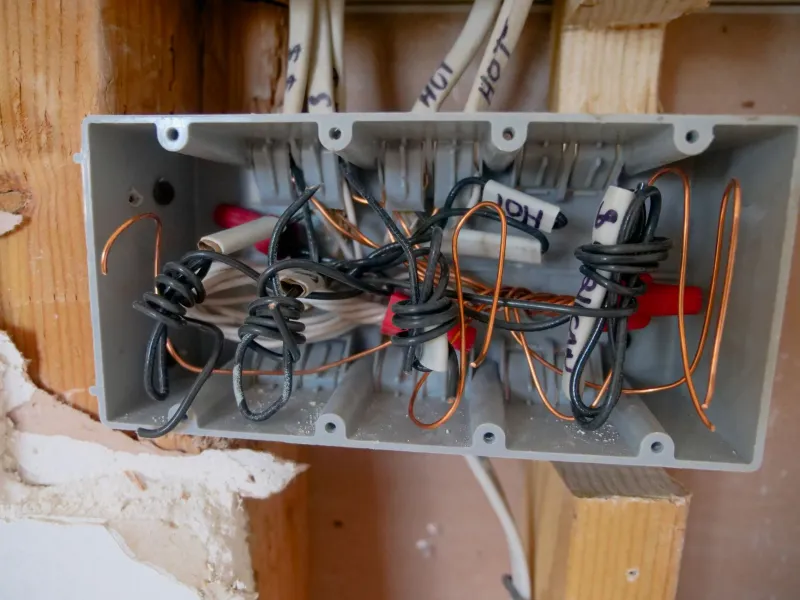
A configuration management database is built for kit that can be addressed, polled and patched. An analogue line has no IP address, no SNMP agent and frequently no named owner. It is a pair of copper wires billed on a legacy account, terminating in a junction box behind a reception desk. The most honest inventory is usually the telecoms invoice: every line that is billed is a line that exists, even if nobody can explain what it does.
A room-by-room method
Start with the bill. Ask your provider for a full lines and circuits report showing the telephone number, exchange, product type and billing status for every service on the account. Reconcile it against any as-built drawings you hold, then walk the estate in pairs: one person from IT, one from facilities. The second pair of eyes matters because the person who knows what a cable does is rarely the person who knows what it costs.
The walk should cover the comms room and risers, lift motor rooms, the security or concierge office, reception and out-of-hours positions, finance and print rooms, warehouse loading bays, plant rooms and any temporary accommodation. Photograph each termination, label it, and record the number, the connected equipment, the business owner, the maintenance contract and the consequence of failure. Bring in third parties early: the lift maintainer, the alarm receiving centre, the fire systems contractor and whoever manages the card payment estate. They often know which lines their equipment depends on better than you do.
Scoring which lines move first
Not every line deserves the same urgency. A simple weighted score gives you a defensible order of work and a conversation piece for the board.
| Factor | Weight | Score 1 | Score 5 |
|---|---|---|---|
| Safety of life | x3 | Purely administrative | Lift, fire or telecare dependency |
| Regulatory or insurance obligation | x3 | None identified | Statutory inspection or insurer requirement |
| Revenue or customer impact | x2 | No customer contact | Payment or customer-facing outage |
| Workaround available | x2 | Mobile handset on the desk | No substitute without capital works |
| Migration complexity | x1 | Swap a handset | Third-party engineer and site visit required |
Multiply each score by its weight, add the totals and rank the estate. Lines supporting lifts, fire signalling and telecare should sit at the top regardless of cost. Payment terminals and out-of-hours contact numbers come next. Fax servers and single analogue handsets can usually wait, provided someone has checked that they are genuinely still in use.
Questions to put to your provider
A short, written set of questions will surface most of the risk in a single exchange:
- Provide a complete list of billed lines, including those showing zero usage.
- Identify which are PSTN, which are ISDN and which are held on transitional products.
- For each line, state the migration path, the lead time and any site visit required.
- Confirm what happens to telephone numbers, CLI presentation and DDI ranges during migration.
- Identify which lines carry alarm signalling, and name the approved IP replacement and the party responsible for commissioning it.
- Confirm what the lift contractor requires for emergency communication, and who signs off the replacement.
- Set out contract end dates, cease charges and any early termination exposure.
- Ask what the provider will do about any line still unmigrated on 31 January 2027. The answer is that it stops working.
Sequencing the work
The sequence should follow the risk score, not the procurement calendar. Safety-critical and insurer-mandated lines move first, with the third-party contractor booked before the order is placed. Payment and customer-contact lines follow, with a tested fallback in place during cutover. Administrative lines come last and should be challenged rather than migrated: a fax line that nobody has used since 2023 is a saving, not a project.
Give the programme a named owner, a single register and a fortnightly review. The cost of inaction is rarely the line rental. It is a lift intercom that fails an inspection, an alarm that never reaches the receiving centre, or a payment terminal that goes dark on a Saturday morning with no engineer booked until Monday.